
Welcoming a child is a joy, yet it comes with vital responsibilities. One essential step for your infant’s future is the newborn hearing test Australia provides. This check identifies potential issues during those first precious days of life.
Data shows that 1 to 3 bubs per 1000 births are affected by some level of auditory loss. This rate is actually higher than all metabolic conditions combined. It makes this specific health check a priority for every family.
Early screening allows your baby to access speech sounds quickly. This support is vital so your baby develops language skills by twelve months. If you need expert support, email [email protected] today.
Understanding the difference between basic screening and a clinical exam helps you plan ahead. This information empowers parents to make informed choices. Expert guidance ensures the auditory wellness journey is clear and stress-free.
Key Takeaways for Aussie Parents
- Early auditory checks occur within the first days of life.
- Sound reception issues affect roughly 1-3 bubs per 1000 births.
- Language development relies on catching soft speech sounds early.
- Universal programs are available across all Australian states.
- An initial check differs from a full diagnostic assessment.
- Medicare typically covers these essential medical checks.
Understanding Newborn Hearing Screening
Identifying potential auditory issues early starts with the routine hearing screening offered to every Australian newborn. This safe health check provides peace of mind for families across the country. It poses no risk to your child and fits easily into those first busy days.
What is Newborn Hearing Screening?
A newborn hearing screening is a simple procedure that checks how your baby responds to sound. This neonatal hearing screening usually occurs in the hospital shortly after birth. The process is quick and completely painless for the infant.
Most newborn babies sleep through the entire process while a trained professional uses specialized equipment. It serves as the first step in the detection of potential issues. This allows for early support before any developmental delays occur.
Prevalence of Hearing Loss in Australian Newborns
In Australia, approximately 2 babies per 1000 births are born with a Permanent Childhood Hearing Impairment (PCHI). This condition can cause a hearing loss that affects one or both ears. It is often not obvious during the first few weeks of life.
“Early detection of hearing loss is the cornerstone of successful language development and social integration for children.”
Before the introduction of universal programs, the typical age of detection was between 18 and 30 months. Early hearing screening now ensures that families receive intervention much sooner. This timely help significantly improves long-term communication outcomes for many babies.
The Difference Between Screening and Diagnostic Testing
It is important to remember that a hearing screening is not a final medical diagnosis. The screening simply identifies if there is a high chance that loss is present. If a baby does not pass, they require a follow-up test.
Specialist audiologists perform diagnostic testing to confirm the exact nature of any issues. This two-step approach ensures that only those who truly need it undergo more complex assessments. Understanding this distinction helps reduce anxiety for parents if further checks are needed.
| Feature | Newborn Hearing Screening | Diagnostic Test |
|---|---|---|
| Primary Goal | Identify potential risk | Confirm hearing status |
| Timing | Within days of birth | Following a “refer” result |
| Procedure | Quick, non-invasive check | Comprehensive evaluation |
Why Newborn Hearing Test Australia is Critical for Your Baby’s Development
Identifying a hearing loss early gives every Australian baby the best possible start for reaching their milestones. A newborn hearing test ensures that any issues are found before they impact the child’s ability to learn. By acting quickly, families can ensure their infants access the world of sound without delay.
The First Year: A Critical Window for Language Development
The first year of life is a vital time for language development. During this period, a baby needs to hear all the soft sounds of speech to build communication skills. Most infants begin talking around 12 months of age if they have clear access to sound.
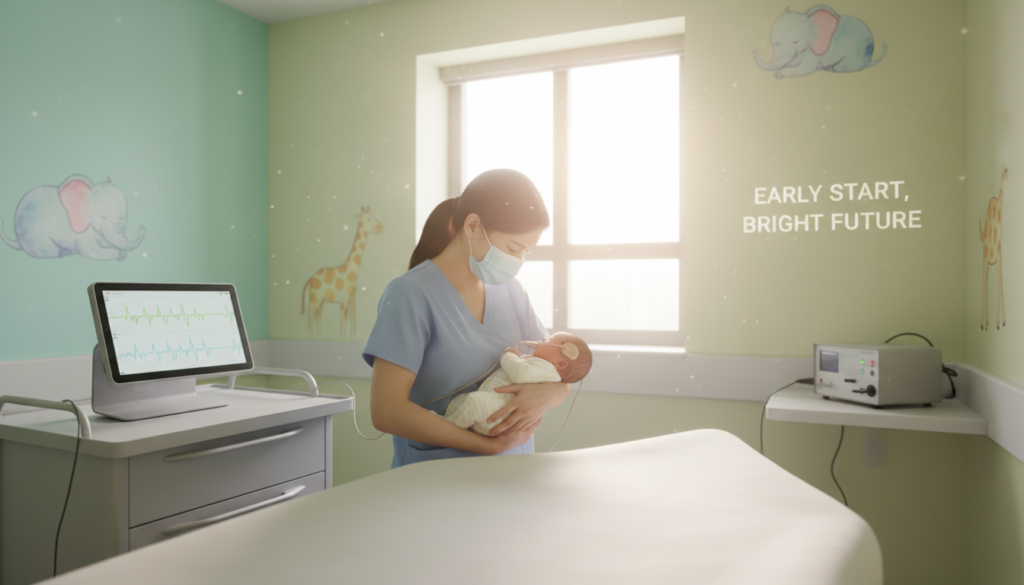
Without adequate hearing during these first three years, infants miss essential auditory input. This results in delays that can affect literacy and academic achievement later in life. Consistent access to clear sound is the foundation for all future learning.
Long-Term Benefits of Early Detection and Intervention
Early detection of hearing loss is the primary key to successful intervention. Research shows that starting support by six months of age leads to the best outcomes for the development of the infant. Early intervention programmes provide families with the education and resources needed to navigate these early stages.
Early detection of hearing loss is the key to successful early intervention and support for children and their families.
Prompt detection allows for immediate management, which is significantly better than delayed intervention. When parents and specialists work together early, they bridge the gap between potential delays and successful communication.
Improved Speech, Language and Educational Outcomes
An infant with hearing loss who receives early help often achieves speech language skills similar to their hearing peers. This leads to better educational outcomes and social confidence in the future. Early detection and management allow these students to enter school with high levels of readiness.
Ongoing newborn hearing checks help identify needs before they become obstacles to learning. Consistent development is possible when language is prioritised from the very first weeks of life. The long-term benefits extend far beyond the classroom into social and emotional wellbeing.
| Intervention Timing | Communication Outcomes | Academic & Social Impact |
|---|---|---|
| Before 6 Months | High potential for normal speech | Strong peer integration and literacy |
| 18 – 30 Months | Risk of significant delays | May require intensive school support |
| Ongoing Monitoring | Stable language growth | Improved long-term quality of life |
Evidence indicates that early speech language management leads to improved speech and hearing outcomes. By choosing early detection, you are investing in your child’s ability to communicate, learn, and thrive in a speech language environment. Early action truly changes lives.
When Should Your Baby’s Hearing Be Tested?
Determining the ideal window for your child’s initial hearing evaluation is a key step in post-natal care. Timing ensures that experts identify any potential issues during the critical early development phase. Most babies undergo their first screening before they even leave the maternity ward.
Recommended Timing: From 6 Hours After Birth
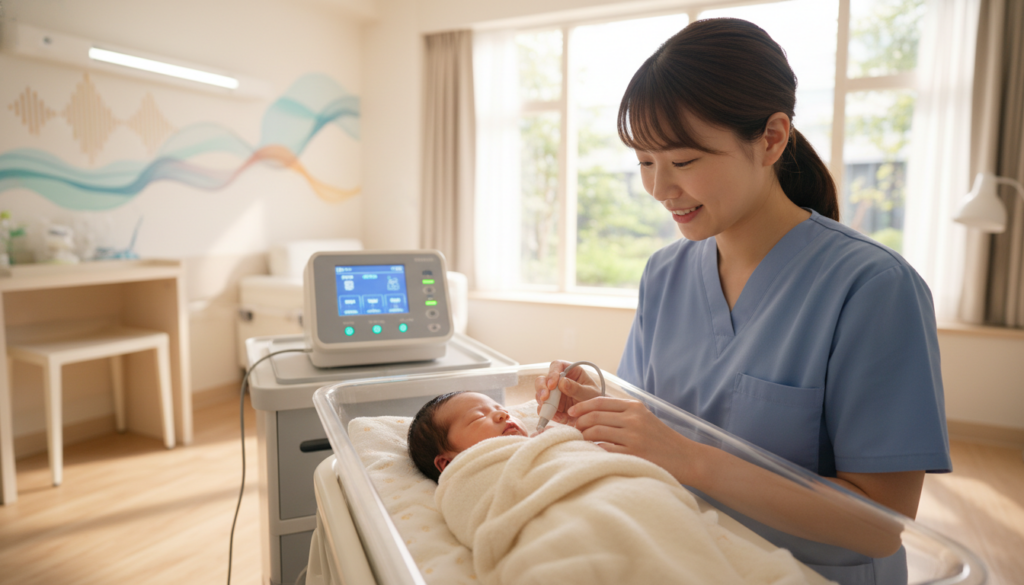
Staff can perform the neonatal hearing assessment as early as 6 hours after birth. Most hospitals schedule the test within the first 48 hours to ensure results are ready quickly. Providing the assessment within 24 hours often allows the baby to remain settled during the procedure.
Hospital Discharge Screening
It is highly recommended that every newborn is tested before leaving the hospital. This time allows parents to receive immediate guidance from health professionals. For a healthy baby, completing the test within 1 month of life is the standard clinical goal.
Special Circumstances That May Delay Testing
In certain cases, doctors may advise waiting to ensure more accurate results. If an infant is being treated for jaundice or taking specific medications, they may postpone the screening. This delay helps avoid false results caused by temporary medical factors or equipment interference.
Premature Babies (Less Than 34 Weeks)
Infants born before 34 weeks gestational age usually require a different schedule. They might not undergo assessment during those initial weeks until they are medically stable. Specialists often wait until these babies reach 3 months of corrected age.
Medically Unwell Newborns
A newborn on a ventilator or in an incubator often needs more time before their first test. Staff wait until the infant is stable to perform the screening safely and effectively. This ensures the best possible care for the child.
Babies in NICU
Babies in the Neonatal Intensive Care Unit follow specific protocols due to higher risk factors. These assessments often occur closer to the time of discharge or by 3 months of age. Early monitoring remains a priority regardless of the post-birth complications.
| Patient Category | Ideal Testing Start | Completion Goal | Testing Environment |
|---|---|---|---|
| Healthy baby | 6 to 48 hours | Within 1 month | Maternity Ward |
| Premature (Under 34 weeks) | When stable | By 3 months | NICU / Outpatient |
| Medically unwell newborn | Post-stabilisation | By 3 months | NICU / Special Care |
| Late screening | After 2 days | As soon as possible | Outpatient Clinic |
Where to Get Your Baby’s Hearing Screened in Australia
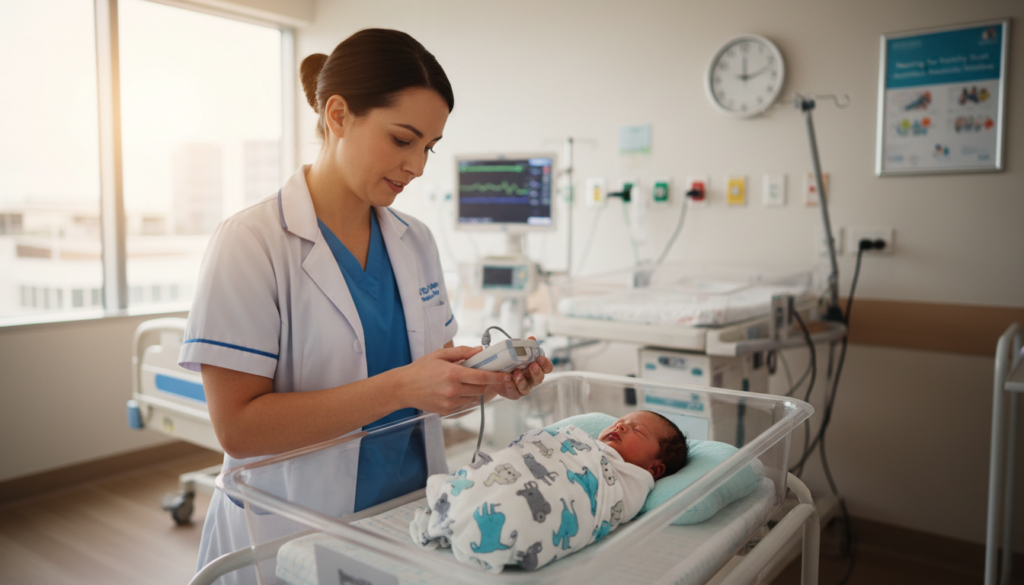
Across the diverse landscape of Australia, various newborn hearing screening services ensure every infant has a healthy start. Most families access these essential tests within the hospital system shortly after birth.
Identifying where to go for your newborn test is a vital step in their early developmental journey. This process helps detect issues before they impact speech or social skills.
Hospital-Based Screening Programmes
Hospital-based screening programmes usually test your baby before you go home. This makes it very convenient to complete the neonatal hearing screening as part of routine postnatal care.
This service allows doctors to monitor hearing health without requiring extra trips back to the clinic. It is the most common way for parents to receive an initial assessment.
State and Territory Availability
Availability for a newborn hearing screening varies depending on which part of Australia you live in. Each region manages its own program to meet local community needs.
Western Australia Universal Screening
The state-wide program in Western Australia provides free screening for all babies. This newborn initiative operates at major birthing hospitals in Perth and regional areas.
The Earbus Foundation delivers this work in private maternity hospitals like St John of God and Ramsay Health Care facilities. They partner with hospitals in Subiaco, Murdoch, Bunbury, and Geraldton.
Other States and Territories
New South Wales, Victoria, South Australia, and the ACT have also recently commenced a universal program. These regions prioritise early detection to improve long-term health outcomes.
In contrast, screening is currently under consideration for health departments in Queensland, Tasmania, and the Northern Territory. Local clinics in these areas may still offer specific tests upon request.
Outpatient and Home Visit Options
If your baby leaves the hospital early, you can use an outpatient service. Qualified nurses ensure no infant misses their hearing screening due to an early discharge.
Home visit options are also available in certain metropolitan areas for added convenience. This flexible screening approach supports families during the busy first weeks of life.
At-Risk Screening Programmes
Staff throughout Australia use at-risk screening for infants with established health factors. However, this approach only identifies about 60% of babies with hearing loss.
Studies show that 40% of children with hearing issues have no established risk factor. This is why universal hearing screening is so important for every child, regardless of risk.
Getting Expert Advice and Support
For expert advice regarding newborn hearing screening services, please contact [email protected]. We provide guidance on accessing a program and managing follow-up care.
Our team helps you understand the hearing screening results and the next steps for your baby. Reach out today to ensure your child receives the best start in life.
The Two Types of Newborn Hearing Tests
Health professionals in Australia rely on two highly accurate and painless screening methods for infants. Both techniques use advanced technology to ensure your child’s auditory system functions correctly from birth. These non-invasive tests happen while your little one sleeps or rests quietly.
Clinical teams choose between these two primary methods based on hospital protocols and the specific health needs of your infant. Understanding the difference helps parents feel more comfortable during the appointment. Each test provides immediate results to help guide early intervention if required.
Automated Auditory Brainstem Response (AABR) Test
The AABR checks the entire auditory pathway. It ensures that sound travels successfully from the ear to the brainstem. This method is exceptionally thorough and reliable for detecting specific medical conditions.
How the AABR Test Works
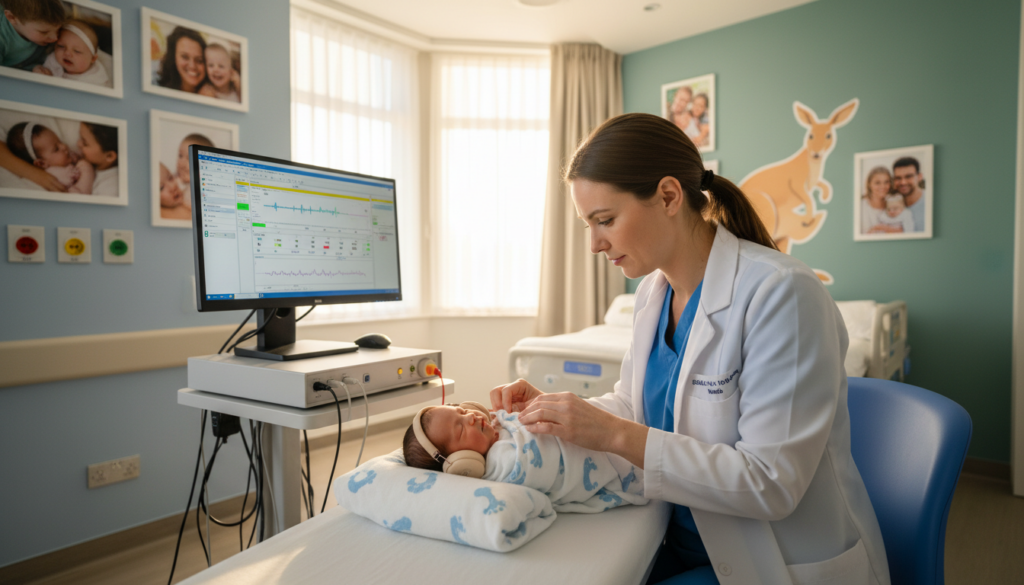
The screener places soft ear cups over the ears that play gentle clicking noises. They also position small sensors on the forehead, neck, and shoulder. These sensors record the electrical activity of the nerve in response to the sounds.
What the AABR Measures
This test measures how the auditory nerve transfers sound from the inner ear to the brain. It sets a “pass” level at approximately 35 decibels. This allows clinicians to identify auditory neuropathy, which other tests might miss.
Test Duration and Process
The process usually takes between 5 to 15 minutes. It requires a calm environment for the sensors to pick up clear signals. Most babies remain completely settled throughout the entire procedure.
Otoacoustic Emissions (OAE) Test
The OAE focus remains specifically on the inner ear. It confirms that the microscopic hair cells in the cochlea are working as they should. This hearing check is often the first step in many Australian hospitals.
How the OAE Test Works
A small, lightweight probe sits inside the ear canal. This probe emits soft clicking sounds into the baby hearing system. A tiny microphone then listens for a specific response from the cochlea.
What the OAE Measures
When the hair cells receive sound, they vibrate and produce a faint echo. The machine detects this acoustic energy, known as otoacoustic emissions. This indicates a healthy and functioning inner ear.
When OAE is Used
Staff typically use OAE for “well babies” in the maternity ward. It is a very fast screening tool. If the probe does not detect an echo in the canal, the team may perform a follow-up test.
Screening Protocols: Which Test Your Baby Will Receive
The choice of screening depends on state guidelines and your infant’s health history. For example, Western Australia uses the Natus Algo3i equipment for its state-wide program. They often start with an OAE and move to AABR if necessary.
Hospitals often follow these standard newborn hearing screening protocols:
- Well Babies: Usually receive an OAE test first due to its speed.
- NICU Babies: Generally receive AABR tests because they are at higher risk for nerve-related hearing issues.
- Follow-up: If a baby does not pass the first OAE, an AABR provides a more detailed look at the ears.
Every newborn hearing screening program in Australia aims for the highest accuracy. Combining these two tests ensures that baby hearing is monitored with the best clinical care available.
| Feature | OAE Test | AABR Test |
|---|---|---|
| Primary Focus | Inner ear (Cochlea) | Auditory nerve and brainstem |
| Equipment | Small probe in canal | Ear cups and skin sensors |
| Common Use | Initial screening | NICU or follow-up screening |
What to Expect During Your Baby’s Hearing Screening
The procedure for checking a newborn’s hearing is designed to be as stress-free as possible for both the infant and the family. Understanding these steps ensures parents feel confident while the health professional performs the necessary checks. Most hospitals aim to complete this process before you leave for home.
Preparing for the Test
Minimal preparation is required for a newborn hearing check. The primary goal is to ensure the infant is settled and the surroundings are conducive to accurate readings.
Consent Forms and Information Recording
Before the process begins, the screener will explain the procedure in detail. They will ask you to sign a consent form and record your contact information, such as your home address. They also document any risk factors that might be linked to potential hearing loss. This information is kept strictly confidential and managed according to National Privacy legislation.
Creating the Right Environment
The best time to screen your baby is when they are sound asleep. High levels of background noise can interfere with the sensitive equipment used during the session. You should turn off electronic devices like mobile phones or radios to keep the room as quiet as possible.
The Screening Process Step-by-Step
During the screening, the screener attaches small sensors or soft probes to the skin. These tools measure how the ears respond to soft clicking sounds. The process is entirely non-invasive and does not require the infant to do anything at all.
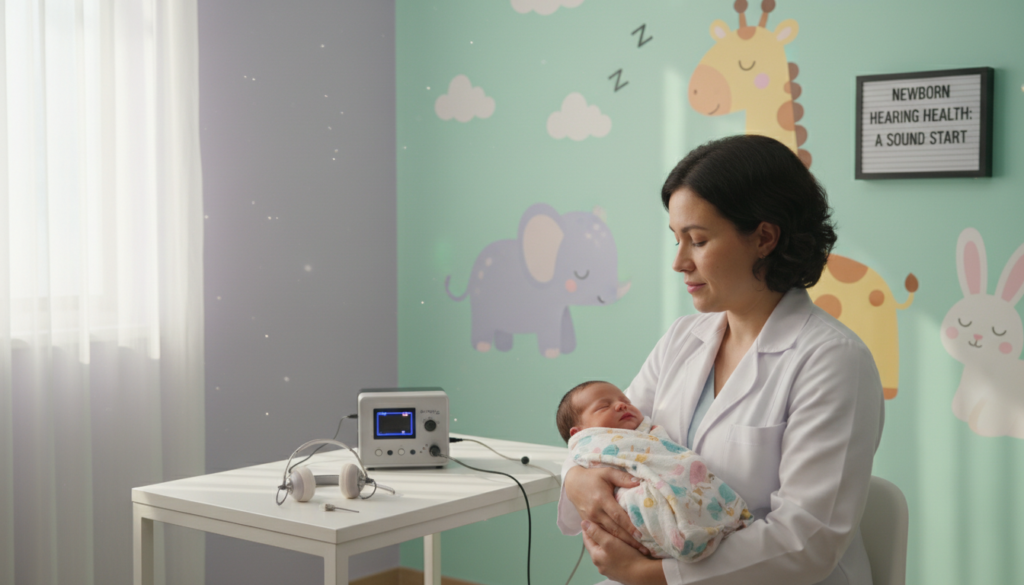
How Long Does the Test Take?
The actual technical portion of the test usually lasts between 5 and 15 minutes. However, you should allow for a total time of 15 to 20 minutes for the full appointment. This extra time allows for settling the infant and discussing the results with the professional.
Is the Test Safe and Painless?
This screening is completely safe and involves no needles or sharp instruments. It is a quick and painless experience that poses no risk to your child’s health. As clinical guidelines suggest:
“Early screening is a gentle way to ensure your child has the best start in life without any discomfort.”
Can Your Baby Sleep or Feed During Testing?
Your baby can remain asleep or even continue feeding while the screener works. Keeping the infant calm helps the equipment capture clear data without interruptions. You do not need to wake them or change their normal routine for the appointment.
Cost and Medicare Coverage
The newborn hearing screening is provided free of charge for all families. As long as your child is eligible for an Australian Medicare card, there is no out-of-pocket expense. This ensures universal access to vital early health assessments across the country.
| Screening Aspect | Details for Parents |
|---|---|
| Total Appointment Time | Approximately 15 to 20 minutes |
| Out-of-Pocket Cost | Free via Medicare eligibility |
| Physical Impact | Painless, safe, and non-invasive |
| Coverage | Checks each ear individually |
Understanding Your Baby’s Hearing Screening Results
Waiting for clinical results can be stressful for new parents. However, you will get the findings of this assessment quickly. Most families know the outcome before they even leave the hospital ward.
Immediate Results After Testing
The screener discusses the results with you right after the procedure. You receive this information while still at the bedside or in the clinic room. This ensures you understand the next steps for your newborn without any unnecessary delay.
What a “Pass” Result Means
A “pass” result means your baby demonstrated adequate hearing responses at the time of the procedure. These responses are sufficient for healthy speech and language development. However, parents should still observe child hearing milestones as the infant grows older.
What a “Refer” Result Means
A “refer” result does not mean your child has a permanent hearing loss. It simply indicates that the initial test did not produce a clear response. This outcome is quite common and usually requires a simple follow-up to get a better reading.
Common Reasons for a Refer Result
There are several reasons why an infant might refer. The baby may have been too unsettled or crying during the first attempt. Also, the environment might have been too noisy for the sensitive equipment to work properly.
Temporary Conditions Affecting Results
Temporary conditions often interfere with the initial results. Amniotic fluid or vernix can block the ear canal shortly after birth. This is very common in a newborn screened within the first 48 hours of life.
The Second Screening Process
If the first attempt is inconclusive, the hospital schedules a second screening. This usually happens 12 to 24 hours later for hospital patients. This short wait gives temporary blockages time to clear naturally from the ears.
When a Second Refer Result Occurs
If the second test also yields refer results, more detailed investigation is needed. This second outcome means the hospital will refer you to a paediatric audiologist. It is a vital step to determine if a true hearing loss exists.
Test Sensitivity and Accuracy
The accuracy of these Australian programmes is impressively high. In Western Australia, 99% of babies pass at either the initial or follow-up stage. Most infants who refer initially are found to have normal hearing after a full diagnostic loss assessment.
| Outcome | Clinical Meaning | Typical Next Step |
|---|---|---|
| Pass | Adequate hearing detected | Monitor milestones |
| First Refer | Inconclusive results | Repeat screening |
| Second Refer | Further investigation needed | Specialist appointment |
| Hearing Loss | Confirmed loss | Early intervention |
Follow-Up Care and Next Steps After Screening
Following your baby’s initial screen, the next phase focuses on comprehensive care and specialized diagnostic assessments. This pathway ensures your infant receives targeted support for their healthy development.
Infant Diagnostic Testing (IDT) Explained
A paediatric audiologist performs the IDT assessment to provide a detailed look at neonatal hearing. This process offers specific results regarding the type, degree, and configuration of any detected hearing loss.
Preparing for Your Diagnostic Appointment
Accurate assessment results depend on your baby remaining settled during the clinical session. The optimum time for this diagnostic test is before your child reaches three weeks of age.
What to Bring
You must bring your Medicare card to the diagnostic clinic. Most follow-up tests are free for families with a valid Medicare referral from their doctor.
Timing and Duration
Appointments often allow up to three hours to feed, change, and settle your baby properly. For best results, keep your child awake for two hours prior to ensure they sleep during the session.
Accessing Specialist Services
For guidance on accessing follow-up care and specialist services after newborn screening, parents can contact [email protected] for expert support. Navigating these systems early provides the best outcomes for your child health.
Australian Hearing Services
Hearing Australia provides audiology services and hearing aids at minimal cost to eligible families. They offer an essential service and continuous monitoring for children throughout their entire childhood.
ENT Specialists and Geneticists
Your GP plays a vital role in managing child health and discussing the implications of a diagnosis. They may refer you to ENT surgeons or geneticists to investigate medical causes or hereditary factors.
Early Intervention Programmes
These programmes connect families with speech pathologists and specialist teachers of the deaf. They help children develop communication skills comparable to their hearing peers from a very early age.
Ongoing Hearing Monitoring Throughout Childhood
Regular child hearing checks remain vital as auditory conditions can develop long after the neonatal period. Children with identified sensorineural loss should also be monitored closely for common middle ear conditions.
Hearing Milestones to Watch For
Monitor your baby’s responses to sound as part of their general care routine. Between birth and three months, they should startle at loud noises or quieten when you speak.
By twelve months, they should copy speech sounds and understand simple words like “no.” Contact your child health nurse if you have concerns about your child hearing milestones.
Conclusion
A newborn hearing test is a vital step toward safeguarding your baby‘s long-term health and development. Early detection of hearing loss helps families access world-class services like Australian Hearing.
Universal screening strengthens the whole community. It ensures all children reach their speech and language goals early in life.
Australia offers expert support through Medicare. Please monitor your baby‘s newborn hearing as they grow. Prompt newborn hearing checks and regular screening give all children a bright future. This fosters a strong community for their hearing needs.
| Action | Outcome for Families |
|---|---|
| Newborn Screening | Early identification and faster access to intervention programmes. |
| Specialist Services | Access to Australian Hearing and cochlear implant technology. |
| Ongoing Monitoring | Ensures speech and language development remains on track throughout childhood. |