
Protecting your auditory health is vital for a high-quality life. Many people experience damage from loud sound without realising it until much later.
Recent data indicates that noise-induced hearing loss impacts up to 24% of adults and 17% of teenagers. This specific impairment can happen suddenly or develop slowly over many months.
It is the only type of hearing loss that is entirely avoidable through smart habits. Whether the damage affects one ear or both, it changes how you engage with others.
Exposure to constant noise is a primary risk factor for permanent damage. Taking care of your ears ensures you do not miss out on important moments.
If you have concerns, professional advice is essential for your long-term wellness. For an assessment in Camberwell, please contact [email protected].
Effective prevention starts with understanding how loud environments affect your safety. Monitoring your noise exposure is a simple way to protect your future.
Essential Takeaways for Your Ears
- Auditory damage from loud environments is 100% avoidable with the right care.
- Up to a quarter of adults show signs of permanent damage from loud sounds.
- Younger generations are at high risk, with 17% of teens showing early signs.
- Damage can manifest instantly from a blast or progress slowly over years.
- Professional assessments are the only way to confirm your current status.
- Residents in Camberwell can reach out to [email protected] for expert help.
Understanding Noise-Induced Hearing Loss and Its Impact
Understanding how noise-induced hearing loss occurs is the first step toward protecting your auditory health for the long term. This condition involves permanent damage to the delicate parts of the ear responsible for sensing sound.
What Is NIHL and How It Develops
Noise-induced hearing loss happens when the auditory system faces excessively loud volumes. This can occur through two primary pathways in our daily lives.
The first is immediate damage from sudden, intense impulse sounds like explosions or gunshots. The second is a gradual deterioration caused by chronic exposure to environments with sustained elevated noise levels.
Who Is at Risk: From Children to Adults
This type of loss affects people across every age group, including infants, children, and teenagers. It is a widespread issue that does not discriminate by age or occupation.
Research indicates that millions of Australians show evidence of noise-induced damage to their hearing structures. Frequent exposure to loud music, power tools, or busy traffic contributes to this growing health concern.
How Loud Noise Damages the Inner Ear
Sound waves enter through the outer ear and travel down the canal to the eardrum. These vibrations then move through three tiny bones in the middle ear to the inner ear.
Inside the cochlea, waves move through fluid and cause sensory hair cells to vibrate. These cells turn mechanical energy into electrical signals that the auditory nerve carries to the brain.
| Transmission Stage | Medium | Primary Structure |
|---|---|---|
| Outer Ear | Air | Ear Canal |
| Middle Ear | Mechanical | Tiny Bones |
| Inner Ear | Fluid | Cochlea |
Most cases of noise-induced hearing issues result from the death of these specialised hair cells. Once these delicate structures are gone, they cannot grow back in humans.
“Unlike in birds and amphibians, human hair cells don’t regenerate—once damaged, they are permanently lost.”
Because these cells are irreplaceable, protecting them from loud sounds is the only way to ensure lifelong hearing health. Awareness of how we process vibrations helps us value these fragile sensory components.
Essential Noise-Induced Hearing Loss Prevention Strategies
Implementing effective strategies for noise-induced hearing loss prevention is essential for maintaining a high quality of life. You can safeguard your hearing by identifying potential hazards before they cause permanent damage. These simple steps allow you to enjoy your favorite activities without compromising your health.
Step 1: Know Which Noise Levels Are Dangerous
Awareness is the first line of defence against auditory loss. Understanding which sounds can harm the ear helps you make better choices in your daily routine.
Understanding the Decibel Scale
Intensity of sound is measured in decibels (dBA). Sounds at or below 70 dBA are generally safe for long exposure. However, consistent noise at or above 85 dBA can cause hearing damage over time.
Common Activities and Their Noise Levels
Different environments pose varying risks to your auditory health. Use the data below to gauge the levels of common noises you might encounter.
| Activity | Noise Level (dBA) | Risk Category |
|---|---|---|
| Normal Conversation | 60–70 dBA | Safe |
| Motorcycles or Power Tools | 80–110 dBA | High Risk |
| Music Concerts or Fireworks | 110–160 dBA | Immediate Risk |
Step 2: Use Proper Hearing Protection
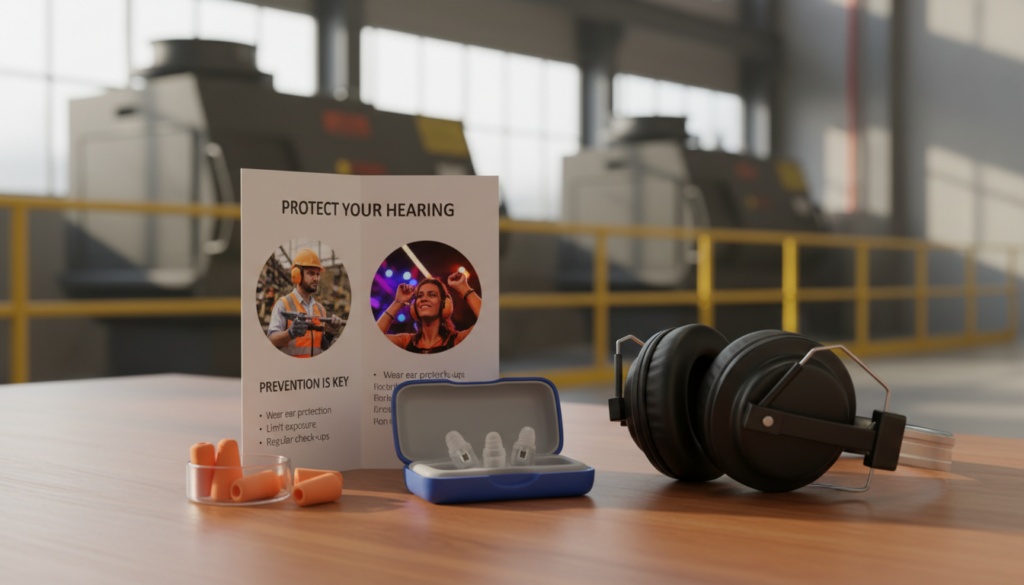
When you cannot avoid a loud noise, you must use protection. High-quality hearing protection is readily available at most Australian hardware or sporting stores.
Choosing the Right Earplugs or Earmuffs
Select earplugs that fit snugly within your canal for the best results. Earmuffs provide a solid alternative for those using heavy tools or attending motorsports. Properly fitted gear can significantly reduce risk of loss during loud activities.
When and Where to Wear Protection
Always wear earplugs at music festivals, movie theatres, or while operating lawn mowers. Be alert to hazardous environmental noises and protect children who cannot yet protect themselves. Consistency is the key to preventing long-term hearing issues.
Step 3: Follow the Distance and Duration Rules
The further you are from a noise source, the lower the impact on your ears. If you cannot reduce the volume, simply move away from the speakers or engines. Limit the time you spend in loud noise environments to allow your ears to recover.
Step 4: Practice Safe Listening with Personal Devices
Modern headphones can produce dangerous levels of sound. Monitoring your exposure while using smartphones or tablets is vital for noise-induced hearing loss prevention.
The 60/60 Rule for Headphones
Health experts recommend the 60/60 rule to reduce risk. Keep the volume at no more than 60% of the maximum setting. Additionally, limit your hearing sessions to 60 minutes or less per day.
Recognising the Warning Signs and Symptoms
Recognising the early red flags of auditory damage can help you seek professional advice sooner. Noise-induced hearing issues often develop very slowly over a long period of time. You might not notice the change in your ears at first because the loss occurs gradually. Eventually, sounds start to feel muffled or distorted, and you may struggle to hear a clear sound in a crowd. This progressive hearing loss can eventually lead to a permanent loss of clarity if left untreated.
Early Indicators of Noise-Induced Damage
One common sign of trouble is needing to turn up the volume on your television or radio. You may also feel that people are mumbling during a normal chat in a quiet room. These small shifts are often the first signs that loud noise has started to damage hearing. If you find yourself asking others to repeat themselves frequently, your hearing health may be at risk.
Temporary Threshold Shift vs. Permanent Hearing Loss
After a loud concert or event, you might experience a temporary threshold shift. This condition usually clears up within 48 hours as the auditory system recovers from noise exposure. However, frequent exposure still creates residual hearing loss that builds up over the years. Over time, these temporary changes transition into a permanent loss that requires medical intervention.
| Feature | Temporary Shift | Permanent Loss |
|---|---|---|
| Recovery Period | Within 16 to 48 hours | No natural recovery |
| Ear Impact | Hair cell fatigue | Hair cell death |
| Primary Cause | Short noise exposure | Repeated loud noise |
| Long-term Result | Possible hidden damage | Permanent hearing change |
Tinnitus: The Ringing That Warns of Damage
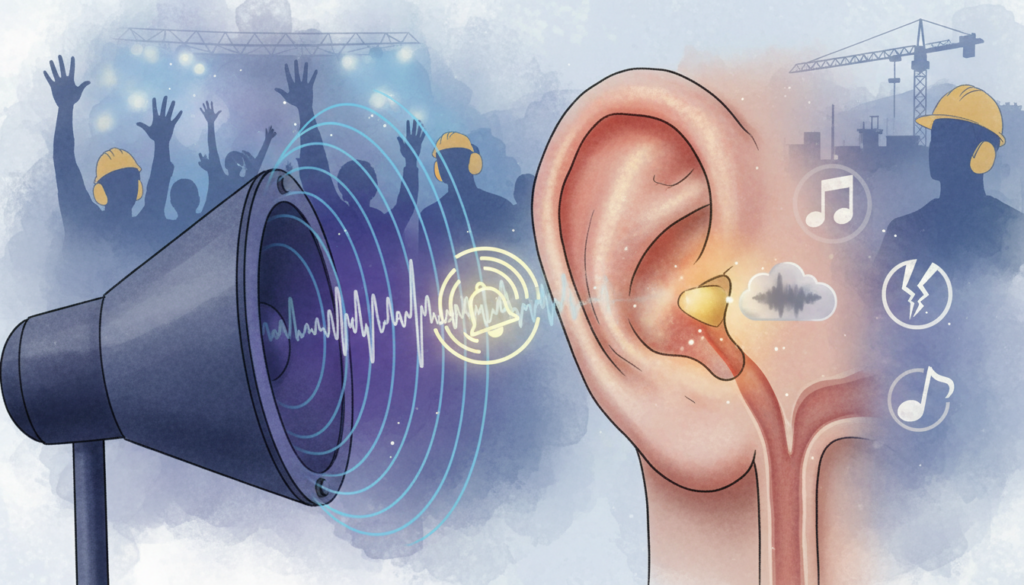
Tinnitus often presents as a persistent ringing, buzzing, or humming sensation inside the ear. This phantom noise serves as a major warning that loud sounds have started to damage hearing. While the ringing might fade after a few hours, it often signals that the internal hair cells are struggling. Chronic tinnitus can occur in one or both ears and remains a primary symptom of noise-induced hearing damage.
How NIHL Affects Speech Understanding
Understanding speech becomes particularly difficult in busy Australian cafes or noisy social environments. High-frequency speech sounds like “s,” “f,” or “sh” often become impossible to distinguish from background noise. This specific type of hearing loss makes following a fast-paced conversation quite exhausting. If you notice that speech sounds muffled despite the volume being loud, you should book a professional assessment.
When to Get Your Hearing Tested
Recognising the triggers for a clinical evaluation is the best way to safeguard your hearing from noise-induced hearing loss. Individual factors like genetic susceptibility and your distance from the sound source determine your level of risk. Maintaining your long-term health requires monitoring these various factors closely.
High-Risk Occupations and Activities Requiring Regular Testing
People in construction, manufacturing, or aviation face high exposure noise daily. If you frequent loud concerts or play in a band, you increase your risk of hearing loss significantly. Using home tools like lawnmowers also counts as dangerous exposure noise that requires professional attention.
Age-Based Testing Recommendations
Adults over 50 need regular checks because noise-induced hearing damage compounds with age. Younger individuals with frequent exposure loud events should establish a baseline for their noise-induced hearing early. Protecting your ears starts with understanding how cumulative exposure impacts your auditory health over time.
Signs That Indicate You Need Immediate Testing
Sudden hearing loss after a loud noise is a major red flag for any individual. Persistent ringing or muffled sound suggests that loud noises have damaged your inner ear. If you struggle to understand speech, the loss might be permanent and requires a clinical assessment.
Professional guidance is vital for screening potential hearing loss before it affects your daily life. Regular evaluations help identify a permanent loss or a temporary shift in your sensitivity. Early detection of noise-induced hearing loss allows for better intervention and protection strategies.
How to Schedule Your Hearing Assessment in Camberwell
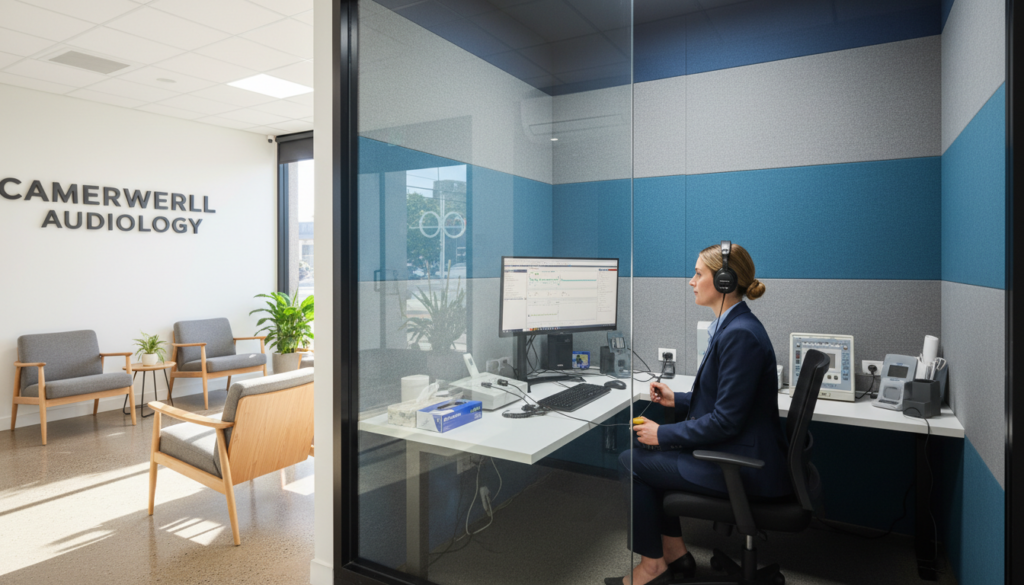
Seeking a hearing test Camberwell audiologist is the best way to manage your exposure loud habits. Email [email protected] to book your comprehensive evaluation today and discuss your specific risk. Proactive hearing care helps reduce the loss of quality of life and preserves your ability to communicate.
Conclusion
Preserving your hearing for life is possible because noise-induced hearing damage is a condition that is completely within your control to prevent. While modern noises in a busy environment create risks, simple habits protect your ears from permanent hearing loss. By managing volume and limiting exposure time, you can safeguard your auditory health effectively.
Understanding the causes of loss is the first step toward better hearing. If you notice signs like muffled sound, it may indicate that your environment has impacted your noise-induced hearing. People who seek professional testing early can prevent further damage and avoid permanent hearing loss.
Identifying common causes of loss helps maintain your connection to the world and life. Protecting your hearing ensures you stay safe from noise and enjoy every moment. If you have concerns, please email [email protected] to schedule an assessment to check your hearing and address any potential hearing loss or loss of function in a high noise area.
## FAQ
### Q: What decibel levels pose a health risk to my inner ear?
A: Sounds above 85 decibels harm your aural health. Using STIHL power tools or visiting Marvel Stadium often exceeds safe limits. Constant exposure noise can lead to permanent damage over time. Monitor the volume in your environment to stay safe.
### Q: Which items help reduce risk during loud activities?
A: High-quality earplugs or 3M Peltor Earmuffs provide essential protection. These tools safeguard the structures within your ears from loud noises. Implementing these steps preserves your long-term health and keeps your life full of sound.
### Q: Can noise-induced damage be reversed?
A: Most permanent auditory loss cannot be cured. This is why prevention is the best strategy. Protecting your ears from extreme volume ensures your aural health remains vibrant for years. Avoid prolonged exposure to loud sounds whenever possible.
### Q: Why do I hear ringing after a concert?
A: Tinnitus is a clear warning sign of damage. It often follows noise-induced events where sound levels were too high. This ringing suggests that air vibrations were strong enough to hurt delicate tissues inside the ear.
### Q: How often should I get a hearing test?
A: People in high-risk jobs should book an annual check-up. Brands like Bay Audio offer professional assessments. If you notice a loss of clarity in speech, see an expert quickly to evaluate the extent of the damage.
### Q: Is modern technology helpful for hearing prevention?
A: Yes, many smartphones now alert you when the volume is too high. These factors help you manage sound levels daily. Use these features to ensure your environment remains safe and to reduce the time spent in risky zones.