
Expert healthcare professionals focus on the complex world of hearing and balance disorders. These specialists help people of all ages. This includes everyone from infants to the elderly.
They ensure ear health is a priority. By finding the right path, they provide care.
This improves how you talk with others. Hearing loss can feel lonely. A clinical audiologist uses tools to help.
They often prescribe devices to restore sound. This guide explores their role in Australia. These healthcare experts follow rules to give you the best hearing support.
Key Takeaways
- Experts specialise in managing ear and balance needs.
- Support is available for all age groups across the country.
- Clinical staff use technology to improve speech and sound.
- Diagnostic testing is tailored to every individual’s lifestyle.
- Australian standards ensure high-quality, evidence-based results.
- This guide covers training and professional services available.
Understanding the Role of an Audiologist
Defining the professional boundaries of an audiologist helps patients understand the specialized care they receive. These university-qualified health professionals focus on the assessment and management of ear disorders.
Who Is an Audiologist?
An audiologist is a primary health professional who specialises in diagnosing communication and vestibular problems. They complete extensive academic training to manage the complexities of the human auditory system.
“Audiology blends clinical science with a patient-centred approach to ensure no individual feels isolated by their communication challenges.”
Scope of Practice and Patient Demographics
Audiologists provide vital clinical services for people of all ages. This broad range includes newborn infants needing early screening and seniors facing age-related loss.
They evaluate auditory health by testing neural responses and tinnitus. These experts also evaluate vestibular function to help those struggling with dizziness or vertigo.
Practice Settings in Australia
In Australia, audiologists work in diverse environments to reach those in need. You can find these professionals in major hospitals, schools, and community centres.
Many specialists work in private clinics to offer easier access for the local community. These specialised clinics also support infants in residential aged care or early intervention programs.
They collaborate with other medical experts to perform a comprehensive hearing assessment. This teamwork ensures the most accurate diagnosis of balance function for every patient.
| Practice Setting | Primary Focus | Patient Demographics |
|---|---|---|
| Hospitals | Complex Diagnostics | All Age Groups |
| Schools | Educational Support | Children and Students |
| Private Clinics | Hearing and Balance | General Public |
| Aged Care | Accessibility Support | Elderly Individuals |
What Does an Audiologist Do? Services and Treatments
Audiologists offer a diverse range of clinical services that extend far beyond simply checking how well you can hear. People often ask what does an audiologist do to manage complex auditory health.
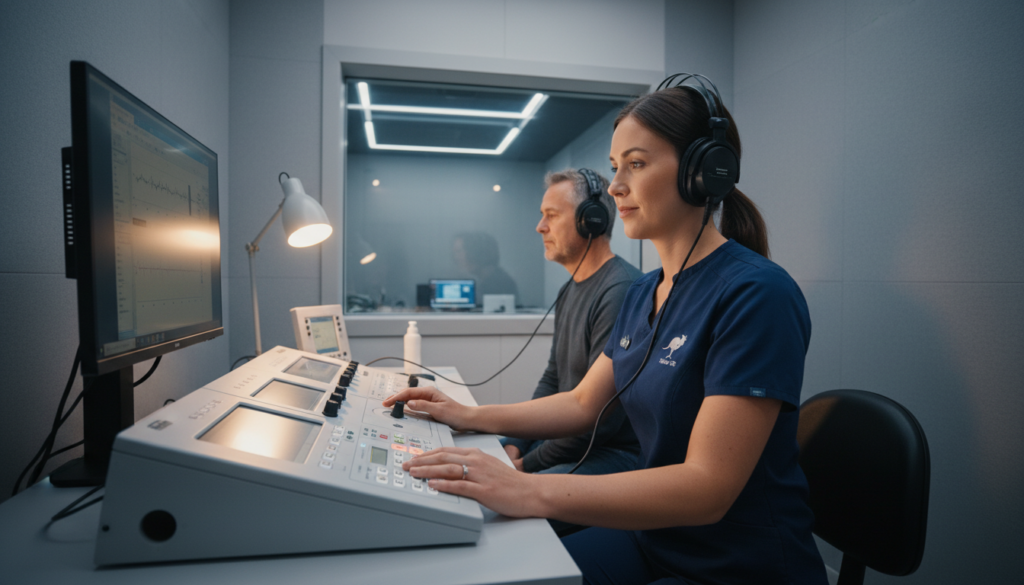
These specialists focus on the management of hearing and vestibular conditions through evidence-based care. They use sophisticated tools to ensure every patient receives a tailored health plan.
Comprehensive Diagnostic Testing
Modern clinics use advanced technology to evaluate the entire auditory system. These procedures help identify the specific type and degree of any impairment present.
Hearing and Auditory Function Tests
Clinicians conduct pure-tone audiometry to measure your hearing ability across different volumes and frequencies. They also use speech audiometry to see how well you comprehend words in quiet and noise.
Additional tests like tympanometry and otoacoustic emissions check the middle ear and inner ear health. These comprehensive tests are essential for an accurate diagnosis.
Balance and Vestibular Assessments
If you experience dizziness or vertigo, an audiologist can perform balance evaluations. Using videonystagmography, they measure eye movements to diagnose vestibular disorders.
Tinnitus and Auditory Processing Evaluations
Specific tests help identify tinnitus and auditory processing challenges. These assessments identify neural function issues that require a targeted treatment approach.
Treatment and Rehabilitation Options
Once a diagnosis is made, these specialists provide tailored solutions to improve communication. This process involves combining high-tech devices with personalised support.
Hearing Aids and Assistive Technology
Audiologists prescribe and fit hearing aids based on individual lifestyle needs. They also recommend hearing assistive technology, such as FM systems, to enhance sound in difficult environments.
Preventative care is also a priority for these professionals. They provide custom ear protection to prevent damage from loud noise or water exposure.
Cochlear Implants and Implantable Devices
For severe cases, they manage cochlear implants and other specialized implants. This includes bone-anchored hearing aids and middle ear devices for permanent conditions.
Aural Rehabilitation and Counselling
Success with these aids requires ongoing rehabilitation and counselling. Training and support help patients maximise their outcomes and regain confidence in social settings.
Qualifications and Expertise of Australian Audiologists
In Australia, the journey to a career in hearing health starts with a dedicated commitment to postgraduate studies. To become a qualified audiologist, practitioners must meet rigorous academic and clinical standards. They combine technical knowledge with a commitment to improving patient communication.
Educational Requirements and Training
To qualify as an audiologist, one must complete a Masters-level degree in clinical audiology. This education involves intense university training and specialised coursework. An aspiring audiologist studies the anatomy of the auditory system and advanced assessment techniques.
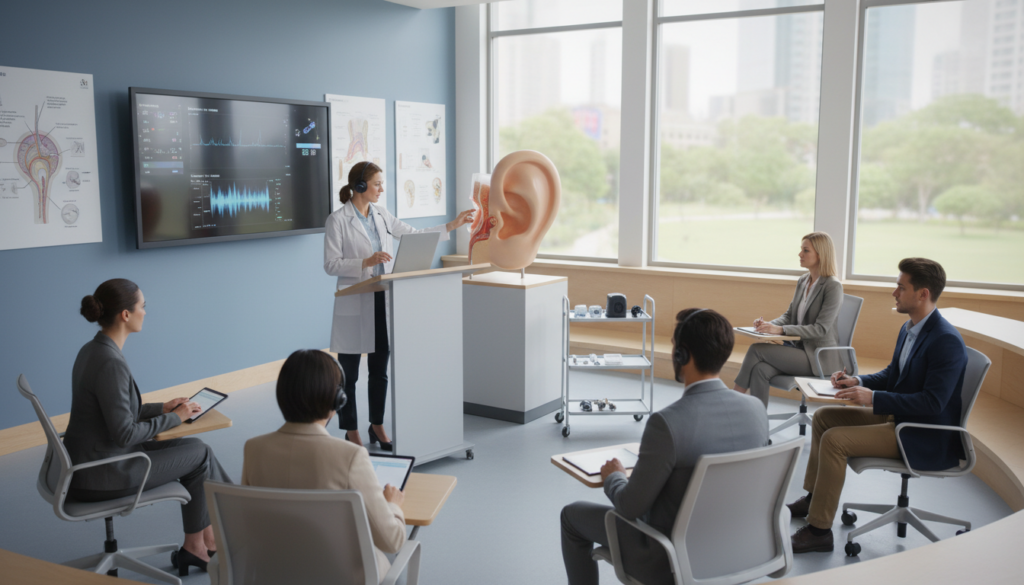
Coursework programs also focus on rehabilitation strategies and counselling skills. Students must finish supervised clinical placements to gain practical experience across diverse patient populations. This postgraduate degree ensures they can handle complex balance and hearing cases effectively.
Professional Accreditation Standards
Local audiologists must maintain membership with accredited bodies like Audiology Australia or the Australian College of Audiology (ACAud). These professionals participate in ongoing research and education to meet evolving patient needs. This ensures they stay updated with the latest clinical developments.
Continuous clinical training allows them to provide the most current evidence-based programs. This oversight guarantees that patients receive a high standard of care. Practitioners must meet specific competency certifications to maintain their accredited status in the industry.
When Should You See an Audiologist?
You should book an appointment with an audiologist if you notice any hearing loss or persistent dizziness. A sudden loss of hearing requires an immediate appointment and potential emergency hospital care. This urgency helps prevent permanent damage from sudden sensorineural issues.
Early assessment by audiologists using the latest audiology research can protect your long-term communication health. Seeking help from an audiologist ensures your specific profile is correctly managed through tailored treatment. You may also need a referral to an Ear, Nose and Throat specialist for medical intervention.
| Standard | Requirement | Benefit for Patient |
|---|---|---|
| Qualification | Masters degree in audiology | Advanced diagnostic skills |
| Education | Supervised hospital placements | Precision in hearing loss care |
| Audiologists | Accredited membership status | Expert management of loss |
Conclusion
Early intervention with a professional audiologist ensures your ears remain protected while addressing any auditory processing needs.
These audiologists offer comprehensive services for managing hearing loss and various balance disorders.
Seeking timely care prevents further loss and helps you maintain a high quality of life.
From diagnostic testing to custom management plans, audiologists provide advanced solutions like hearing aids.
They focus on prevention to shield your ears from noise damage and catch problems early.
Expert guidance helps individuals overcome hearing challenges and manage complex ear-related disorders effectively.
Don’t ignore signs of hearing loss or balance problems.
Schedule an appointment today for a professional assessment and personalised care.
Contact our team at [email protected] to book your appointment or discuss your hearing health loss and auditory processing concerns.
Professional audiologists treat hearing loss to protect your hearing and prevent future loss.
Understanding what an audiologist does allows you to make informed decisions about your health.
Let a dedicated audiologist guide your hearing journey today.
| Audiology Focus Area | Key Benefit |
|---|---|
| Diagnostic Assessment | Early identification of hearing loss |
| Prevention Services | Protection for your ears |
| Rehabilitation | Improved communication and balance |