
Vital health and safety standards are essential for any local firm. High noise levels can cause permanent damage, so regular screening is a top priority. Protecting your staff from sound-induced harm is a vital part of your safety programme.
Our professional audiometric testing follows the AS/NZS 1269.4:2014 standard for your peace of mind. We provide a workplace hearing test Australia based to ensure you stay fully compliant with all current WHS laws.
Employers must book an initial audiometric check within three months of a new hire starting. This compliance testing then repeats every two years for those exposed to noise at 85 dB(A) or peaks of 140 dB(C).
You can choose between mobile onsite audiometric testing units or visiting our local clinics. For more info, please contact us at [email protected] to discuss your specific business needs and requirements.
Guarding your business environment reduces liability and builds a stronger work culture. Our comprehensive service makes it simple to manage your legal duties while looking after the wellbeing of your team.
Key Takeaways for Aussie Businesses
- Compliance with AS/NZS 1269.4:2014 is a legal requirement in noisy sectors.
- New employees require a baseline check within three months of commencement.
- Monitoring must occur every two years for staff in high-risk zones.
- Mandatory checks trigger at noise levels of 85 dB(A) or 140 dB(C) peaks.
- Mobile onsite and clinic-based options offer flexibility for all companies.
- Early detection of deterioration protects staff and reduces business liability.
The Critical Importance of Workplace Hearing Protection
In 2021, long-term noise exposure accounted for 98% of workers’ compensation claims for deafness. This noise-induced hearing loss costs Australian businesses approximately $29.7 billion every year. Excessive noise in the workplace remains a major hazard that leads to irreversible consequences for the team.
The inner ear contains tiny hair cells in the cochlea that convert vibrations into signals for the brain. Loud sounds can easily damage these specialised structures through repetitive strain. Unlike other cells in the body, these hair cells do not regenerate once they die.
This biological reality means any loss is permanent and cannot be reversed by medicine or surgery. Undetected hearing deterioration significantly affects workplace safety and ruins communication efficiency. Preventing permanent auditory loss is far more effective than attempting to treat it later.
Protecting employees is a moral obligation and a smart strategy for health safety. Monitoring noise-induced hearing levels helps managers identify high-risk areas before significant damage occurs. Regular hearing tests ensure that employees maintain their quality of life while reducing the risk of a future hearing loss claim.
| Impact Category | Business Consequences | Employee Consequences |
|---|---|---|
| Physiological | Increased liability risks | Irreversible cell destruction |
| Financial | $29.7 Billion annual cost | Reduced future earning capacity |
| Operational | Lowered safety awareness | Difficulty in communication |
| Legal | Regulatory non-compliance | Permanent sensory disability |
Understanding Your Legal Obligations for Audiometric Testing
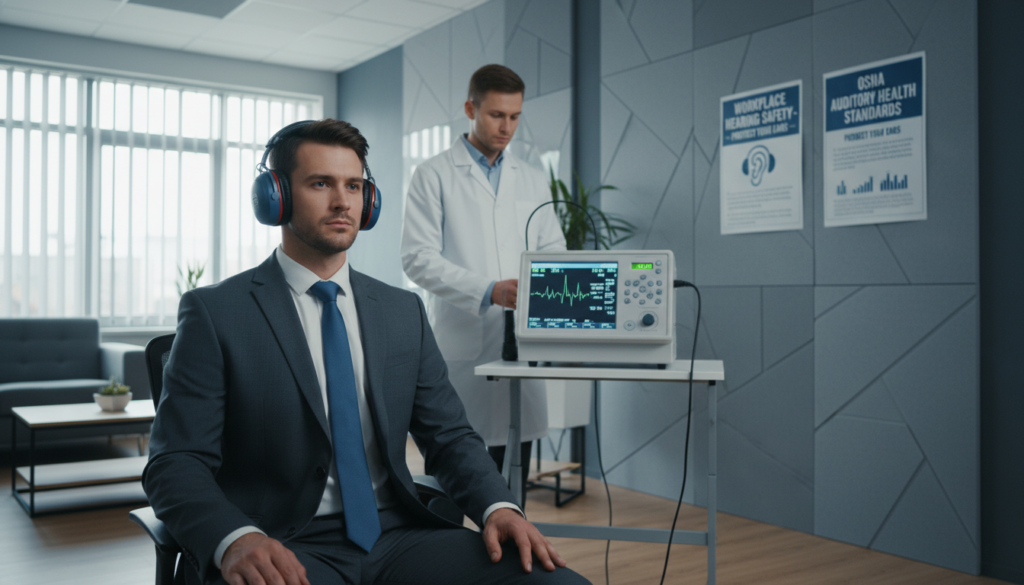
Navigating the legal landscape of occupational health requires a clear focus on noise management and worker safety. Under the Work Health & Safety Regulations (2017), employers have strict obligations to manage hazardous noise. You must ensure that exposure at work does not exceed 85 dB(A) over an eight-hour period.
Peak sound pressure must never go above 140 dB(C) to prevent immediate, permanent damage. Failing to meet these regulations can lead to serious legal consequences and heavy fines. Businesses also face obligations regarding liability for any hearing loss that occurs during a worker’s employment.
Australian WHS Regulations and Standards
These safety regulations are enforceable legal standards rather than simple suggestions. To maintain compliance, businesses must follow the AS/NZS 1269.4:2014 standard for occupational noise management. This specific standard ensures that audiometric testing procedures remain consistent and accurate across all industries.
Following these regulations helps shield employers from prosecution and expensive compensation claims. It demonstrates that you take your duty of care seriously. Safeguarding employee health is both a moral and a legal priority for modern Australian companies.
Mandatory Testing Timelines and Frequency
Timing is everything when it comes to monitoring hearing health effectively. You must provide a baseline testing session within three months of an employee starting in a noisy role. After this initial check, workers require follow-up audiometric testing every two years.
If staff work in environments reaching 100 dB(A), you might need more frequent testing than the standard intervals. Monitoring every two months could be necessary for specific high-risk zones or tasks. Consistent compliance with these months and years intervals ensures you catch hearing changes early.
Regular audiometric testing acts as an early warning system for your business safety culture. It allows you to adjust hearing protection strategies before significant damage occurs. Using a structured testing schedule protects both the worker’s quality of life and the company’s reputation.
| Requirement Type | Threshold / Standard | Mandatory Frequency |
|---|---|---|
| Noise Exposure Limit | 85 dB(A) or 140 dB(C) Peak | Continuous Monitoring |
| New Worker Baseline | AS/NZS 1269.4:2014 | Within 3 Months of Start |
| Ongoing Monitoring | AS/NZS 1269.4:2014 | At Least Every Two Years |
| High-Risk Exposure | Above 100 dB(A) | Increased Frequency Required |
Workplace Hearing Test Australia: Our Comprehensive Service
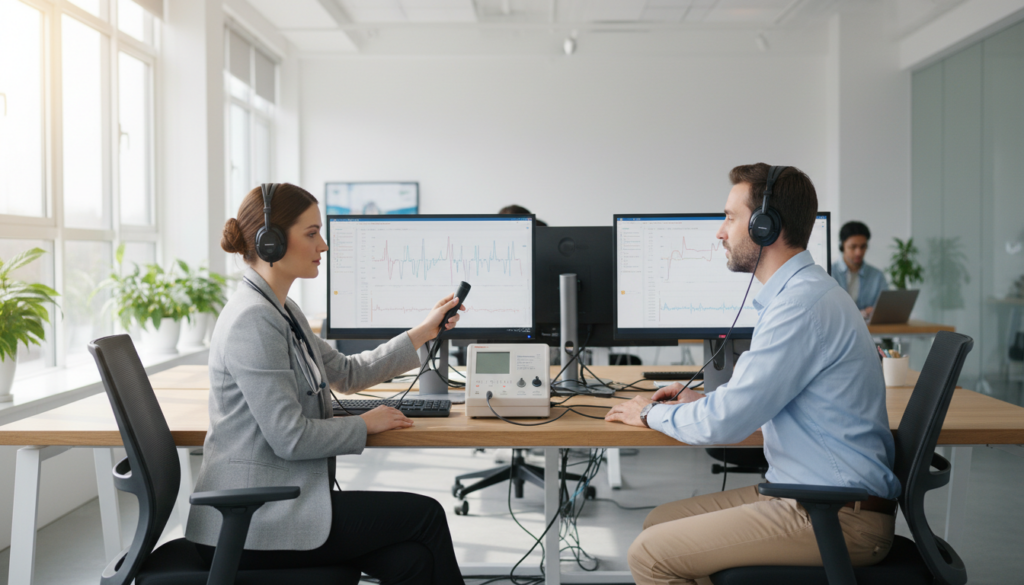
Navigating health and safety requirements is easy with our audiometric testing service. We provide a comprehensive workplace hearing test service designed for diverse industries. Our team reaches you whether you are in a city or a remote area.
Our professional staff ensures the highest level of accuracy for every employee. In Victoria, each session takes approximately 10 minutes. In all other Australian states, the testing process requires 12 minutes per person.
This efficient approach allows you to schedule staff without losing significant productivity. We understand that business continues around the clock. Our flexible scheduling accommodates unique shift patterns at any time or location.
You will receive detailed results by the close of business the following Friday. For urgent needs, we often deliver reports within 24 to 48 hours. This holistic approach helps you maintain a safe and compliant environment with minimal effort.
Mobile Onsite Testing Across Australia
Our mobile onsite testing features purpose-built vehicles that travel directly to your location. These facilities are walk-in and fully soundproof to ensure comfort. Each unit contains booths that comply strictly with the AS/NZS 1269.4:2014 standard.
This workplace service eliminates the need for your employees to leave the site. By bringing the clinic to your site, we maximise participation rates. We guarantee reliable audiometric results regardless of your geographic location across Australia.
The mobile units are fitted with state-of-the-art audiometric testing equipment. This ensures that background noise never interferes with the accuracy of your results. Our vans provide a private and professional space for every staff member.
Clinic-Based Testing Options
For businesses that prefer off-site assessments, we offer various clinic-based testing options. Our primary facility is located at Suite 1, Level 1, 402-410 Chapel Rd, Bankstown, NSW 2200. We also host clinics in Alexandria, Blacktown, and Hurstville.
Each clinic uses identical industry-leading equipment and quality headphones. This ensures that every test remains consistent with our onsite results. Our clinic services provide a flexible alternative for smaller teams or new starters.
Whether you choose a clinic or a mobile unit, our services provide the same professional standard. We are committed to delivering a high-quality hearing test program for your entire workforce. Contact our team to find the most convenient location for your next round of audiometric testing.
How Noise-Induced Hearing Loss Affects Your Workforce
Protecting your staff requires understanding how noise-induced hearing loss destroys the delicate structures of the inner ear. Inside the cochlea, tiny hair cells transform sound vibrations into electrical signals for the brain.
Constant exposure to loud noise can permanently destroy these sensitive cells. Unlike other parts of the human body, these ear cells cannot regenerate once they expire.
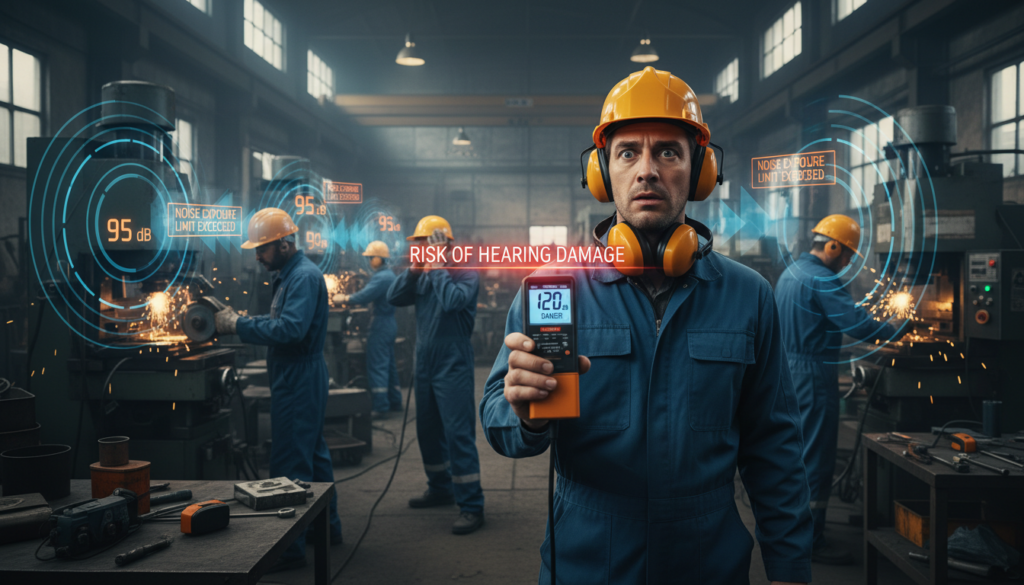
This cumulative damage often goes unnoticed until the hearing loss becomes severe. Over time, workers may lose the ability to hear warning signals or follow complex instructions, creating significant safety hazards. High levels of noise interfere with clear communication and team coordination.
These challenges lead to increased absenteeism and “presenteeism,” where employees are physically present but struggle to perform. This struggle with hearing significantly lowers operational efficiency and team morale across the organisation.
- Reduced ability to communicate effectively in busy environments.
- Increased fatigue and social isolation due to high noise exposure.
- Higher risk of workplace accidents from missed auditory cues.
Regular audiometric testing ensures early detection, allowing for professional intervention before a permanent loss occurs.
Key Benefits of Implementing Regular Hearing Tests
Prioritising auditory health through consistent screening transforms workplace culture and financial stability. By choosing to implement regular assessments, you create a protective barrier around your most valuable assets: your people. This proactive approach serves as a strategic investment that delivers high returns across multiple departments.
Comprehensive testing fosters a positive safety culture where employees feel truly valued and protected. This sense of security often leads to improved morale and higher retention rates. Furthermore, showing a strong commitment to health safety improves your employer brand, helping you attract quality talent.
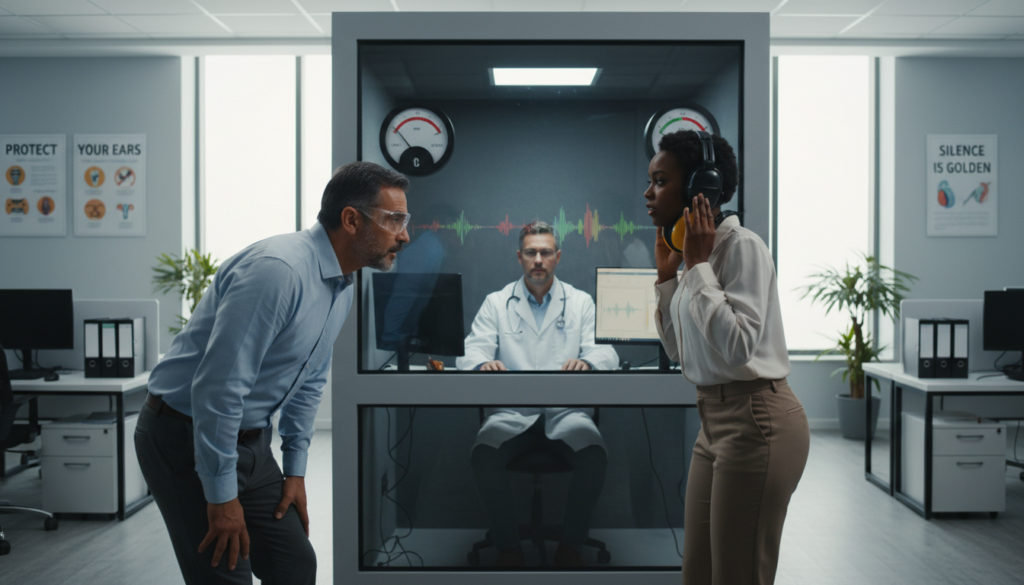
Maintaining high standards of compliance protects your business from heavy regulatory penalties. It demonstrates due diligence in meeting WHS obligations during the term of employment. By identifying a risk early, you can take action before it becomes a permanent issue.
Early detection of noise-induced hearing loss is the most effective way to preserve worker quality of life while safeguarding business interests.
Regular testing ensures that any changes in hearing are caught before they impact a person’s life or ability to work. This creates a sustainable environment where health is prioritised alongside production goals. Ultimately, it builds a more resilient and loyal workforce.
Preventing Costly Workers’ Compensation Claims
Workers’ compensation claims can be incredibly expensive and can severely damage an employer’s local reputation. Establishing baseline hearing levels through regular tests helps you document that protective measures were effectively implemented. This data reduces the risk of disputed claims by providing clear evidence of hearing status over time.
Proactive work health programmes often lead to lower insurance premiums and better financial outcomes. By mitigating the risk of legal action, you protect your business from substantial financial liabilities. It is a vital step for any Australian company managing high-noise environments.
Enhancing Workplace Safety and Productivity
When workers maintain healthy hearing, they remain alert to auditory warning signals and machinery sounds. This situational awareness is critical for maintaining safety and preventing accidents on site. Clear verbal communication ensures that instructions are followed accurately, reducing the likelihood of human error.
Resolving hearing problems early also supports higher engagement and better concentration among workers. Effective communication throughout teams leads to significant productivity gains and smoother operations. Regular testing ensures your employees stay focused on their daily tasks within the workplace.
| Benefit Category | Impact of Regular Testing | Long-term Business Outcome |
|---|---|---|
| Financial | Lower compensation risk | Reduced insurance premiums |
| Operational | Better communication | Increased team productivity |
| Compliance | Legal due diligence | Protection from WHS penalties |
| Safety | Higher situational awareness | Reduced onsite accidents |
Our AS/NZS 1269.4:2014 Compliant Testing Process
Our expert team delivers an audiometric testing process that strictly adheres to the AS/NZS 1269.4:2014 regulatory framework. This ensures every assessment is legally compliant and medically sound for your workforce. We begin with a detailed pre-test review of the employee’s noise exposure history.
This includes both workplace and recreational noise levels to identify pre-existing conditions or ear health issues. We use standard air conduction audiogram methods to create a complete hearing profile for every individual. This measures ability across various frequencies with high precision and clinical accuracy.
Our staff also inspect personal protective equipment like ear plugs or muffs during the session. We provide instructions on correct use to improve workplace safety and noise management. By following these strict protocols, we help businesses mitigate risks and protect their employees.
The entire process takes only 10 to 15 minutes per person. This minimises disruption to your daily operations while maintaining high standards of accuracy. It is the most efficient way to manage your ongoing compliance needs across any Australian worksite.
State-of-the-Art Equipment and Soundproof Facilities
We utilise state-of-the-art audiometric equipment for every session. This includes calibrated audiometers and quality headphones that meet Australian specifications for precision. High-quality tools are essential for reliable results in any industrial setting.
Testing takes place in purpose-built soundproof booths. We monitor background and ambient noise levels constantly to meet AS/NZS 1269.4:2014 requirements. Each booth is meticulously maintained to block external distractions effectively. This controlled environment ensures that the test results reflect the employee’s true hearing ability.
What Employees Experience During Testing
The experience for your staff is simple and non-invasive. Employees wear comfortable headphones in a quiet booth. They listen for sounds at different pitches and volumes throughout the assessment.
The employee simply indicates when they hear a tone. Our trained testers guide them through each step of the testing process. This straightforward assessment ensures comfort and ease of use.
Participants often find the process quick and interesting. It provides a clear snapshot of their hearing health in a stress-free environment. This proactive approach helps build a culture of safety within your team.
Testing Frequency and Ongoing Monitoring Requirements
Understanding when to conduct audiometric testing is essential for managing workplace noise exposure effectively over time.
All new employees entering noisy environments must complete a baseline test within three months of starting their role.
This initial assessment serves as a vital reference point for all future hearing comparisons.
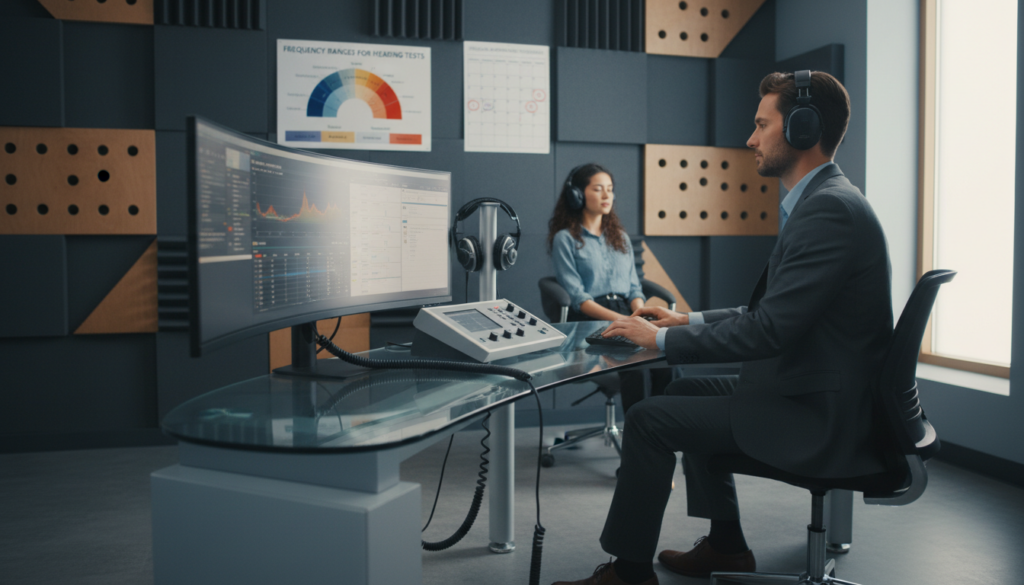
Establishing a baseline early makes your monitoring programme far more effective.
For most staff, regular monitoring testing occurs every two years to track any changes in hearing health.
However, workers dealing with extreme noise levels at or above 100 dB(A) often require more frequent assessments.
Consistent monitoring helps identify gradual hearing shifts that might otherwise go unnoticed by the worker.
Company leaders use these results to identify trends across different sections or specific equipment.
Managing various levels of exposure ensures you meet your legal duties while protecting your staff.
By comparing current data with previous audiometric assessments, you can pinpoint exactly where hearing loss might occur.
This proactive approach ensures a continuous commitment to the health of your entire workforce.
Regular checks provide peace of mind for both the employer and the employee throughout their time with the company.
| Assessment Type | Required Timing | Primary Objective |
|---|---|---|
| Baseline Testing | Within first 3 months | Establish a hearing benchmark for new staff |
| Standard Monitoring | Every 2 years | Track hearing shifts for standard noise levels |
| High-Risk Monitoring | Increased Frequency | Protect staff exposed to noise at or above 100 dB(A) |
| Trend Analysis | During every cycle | Compare current results with previous assessments |
Which Industries and Workers Require Hearing Assessments
Mandatory hearing tests apply to any environment where sound levels exceed the national safety standard. Australian regulations mandate testing when workers face noise exposure above 85 dB(A) averaged over eight hours. Additionally, any peak noise level reaching 140 dB(C) triggers an immediate requirement for regular audiometric monitoring.
High-Risk Occupations and Noise Exposure Levels
Certain industries carry inherent noise risks due to the nature of their daily operations. Manufacturing facilities, construction sites, and mining operations are the most common sectors requiring strict oversight. Workers in agriculture and the entertainment industry also face significant noise levels from heavy machinery or amplified sound.
Other at-risk sectors include aviation ground crews and automotive workshops. Metalworking and woodworking operations frequently use tools that produce hazardous sound. Food processing plants often use equipment that contributes to cumulative exposure over long shifts.
Identifying Noise Hazards in Your Workplace
Employers must evaluate their environment to determine if a formal testing programme is necessary. Identifying noise hazards involves looking at heavy machinery, power tools, and compressed air equipment. Even open-plan offices or call centres may need an assessment if background noise levels consistently approach limits.
If you are unsure about the specific levels in your workplace, professional consultation is available. Experts can conduct a noise exposure assessment to ensure the environment remains compliant. This proactive approach protects hearing and reduces the risk of legal complications for the workplace.
Regularly monitoring exposure helps maintain a safe workplace and preserves long-term hearing health.
| Industry Sector | Primary Noise Source | Common Risk Type | Testing Frequency |
|---|---|---|---|
| Construction | Jackhammers & Power Tools | High-Impact Impulse Noise | Every 2 Years |
| Manufacturing | Industrial Fans & Assembly Lines | Continuous Steady Noise | Every 2 Years |
| Aviation | Jet Engines & Turbines | Extreme Peak Sound Levels | Annual Review |
| Mining | Drills & Heavy Excavators | Sustained High Decibels | Every 2 Years |
| Entertainment | Amplified Music & Sound Systems | Variable Intermittent Noise | Every 2 Years |
Fast Results Delivery and Detailed Reporting
After completing your audiometric testing, getting the results into your hands promptly is our priority. We deliver comprehensive results by close of business the following Friday, or often within 24 to 48 hours. This quick turnaround time allows for immediate action regarding workplace hearing safety.
Each report includes detailed audiogram data showing hearing thresholds across all frequencies. We provide expert guidance to ensure your business stays compliant with Australian WHS standards. Our assessment process compares current data with your baseline to identify any significant changes in employee health.
- Comparative analysis against previous tests to detect hearing deterioration.
- Trend identification across specific roles during the assessment period.
- Immediate notification if a hearing test reveals urgent results.
These results serve as essential evidence for audits and workers’ compensation claims. By monitoring changes through regular tests, you protect your team and maintain compliance. Our audiometric testing ensures your results are accurate, helping you pass every test. We ensure each test provides clarity. Professional hearing test providers ensure high-quality audiometric testing results. We stand by our test results.
Conclusion
Protecting your team’s hearing ability starts with a comprehensive audiometric service. Our Australia-wide management solutions help employers identify ear changes early. These regular tests ensure a safe workplace environment and prevent hearing loss.
Investing in a quality management programme saves time. You should prioritise early detection hearing to identify changes quickly. Request a quote for professional health safety assessments today.
Our early detection hearing supports noise management. Request a quote to protect your employees from noise in the workplace. Email [email protected] for a hearing test. Early detection hearing assessments and a professional test keep ear safety high. Request a quote now.
| Service Benefit | Location Coverage | Regulatory Compliance |
|---|---|---|
| Mobile Onsite Testing | Australia-wide | AS/NZS 1269.4:2014 |
| Clinic-Based Assessments | Major Australian Cities | WHS Standards |